
News
Breakthrough Case Study: Chiropractic Treatment Resolves 2-Year Chronic Dizziness by Restoring Neck Alignment
46-Year-Old Man Achieves 100% Recovery from Posttraumatic Dizziness Through Chiropractic BioPhysics® Protocol
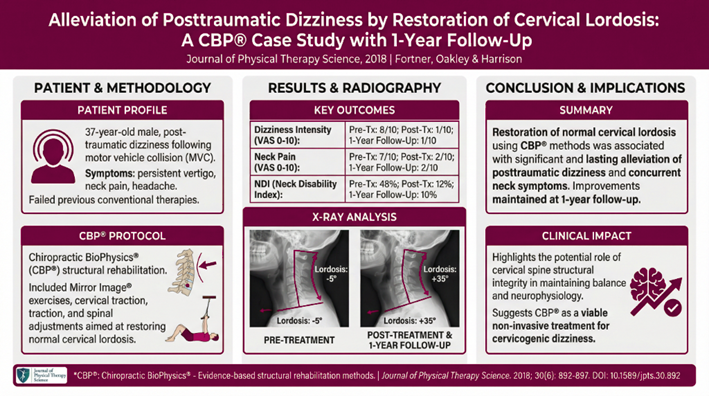
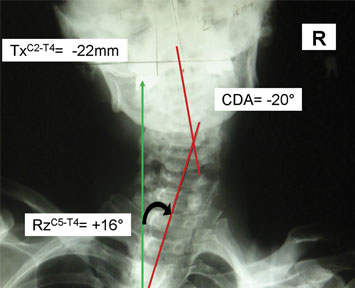
WESTMINSTER, CO — For two years, a 46-year-old male suffered from daily dizziness, stiffness, and debilitating neck pain following a whiplash injury. Like many victims of motor vehicle accidents, he found his life put on hold, struggling with symptoms that conventional treatments had failed to fully resolve. However, a newly published case study reveals how a specialized spinal rehabilitation protocol known as Chiropractic BioPhysics® (CBP) didn’t just manage his symptoms—it eliminated them completely.
This remarkable recovery highlights a critical but often overlooked factor in chronic post-traumatic dizziness: the structural alignment of the cervical spine (neck).
Understanding the Connection: Neck Alignment & Dizziness
The human neck is designed to have a natural C-shaped curve, known as cervical lordosis. This curve acts as a shock absorber and is vital for proper nerve function and blood flow to the brain. When this curve is lost or reversed—often due to trauma like whiplash—it creates abnormal tension on the spinal cord and brainstem.
In this case study, X-ray analysis revealed that the patient had suffered a significant loss of this natural curve. Instead of the healthy range of -31° to -42°, his neck curve was reduced to just -17.4°. Furthermore, he suffered from forward head posture, where the head juts forward from the shoulders. His head was positioned 31.2mm forward, more than double the normal limit of 15mm.
Researchers concluded that this structural misalignment was the “silent saboteur” behind his chronic dizziness, tinnitus (ringing in the ears), and heart palpitations.
What is Chiropractic BioPhysics® (CBP)?
Chiropractic BioPhysics® is widely considered the most scientific and research-based approach to chiropractic care. Unlike traditional methods that focus primarily on immediate pain relief through spinal manipulation alone, CBP emphasizes structural rehabilitation.
The goal is not just to mobilize joints but to physically reshape the spine back to its normal anatomical alignment. This is achieved through a rigorous combination of specific traction therapies, mirror-image exercises, and spinal adjustments.
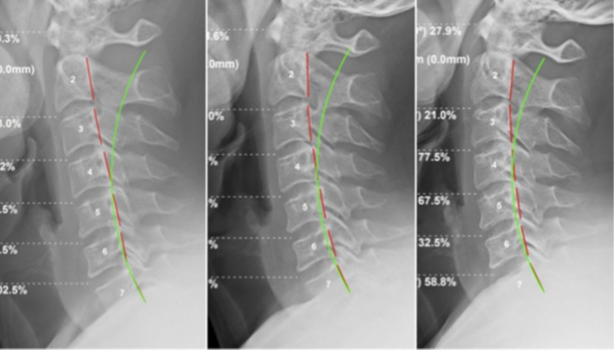
Figure 1: Visual evidence of cervical spine alignment restoration. Correcting the neck curve relieves tension on the nervous system. Left: patient initial cervical x-ray; Middle: 1st patient follow-up after treatment x-ray; Right: Final follow-up after treatment x-ray showing correction of the cervical curvature.
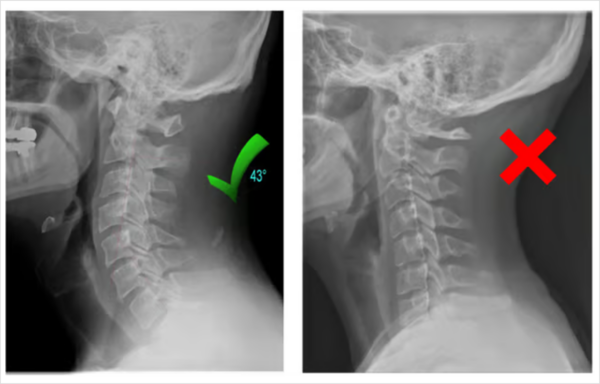
Figure 2: Restoring the cervical curve through specific CBP traction methods is essential for long-term recovery.
Remarkable Results: A Timeline of Recovery
The results of this protocol were nothing short of life-changing for the patient. By addressing the root cause—the structural misalignment—symptoms that had persisted for two years began to vanish.
| Metric | BEFORE Treatment | AFTER 16 Weeks | 1-Year Follow-Up |
|---|---|---|---|
| Dizziness | Daily Episodes | Resolved (No daily dizziness) | 100% RESOLVED |
| Neck Pain | 5/10 Intensity | 2/10 Intensity | 0/10 (Pain Free) |
| Cervical Lordosis | -17.4° (Hypolordotic) | -23.2° (Improving) | -30.4° (Restored to Normal) |
| Forward Head Posture | 31.2 mm | 22.1 mm | 15.9 mm (Near Perfect) |
| Other Symptoms | Tinnitus, Palpitations | Significantly Improved | Completely Resolved |
100% IMPROVEMENT
Complete resolution of dizziness, neck pain, and tinnitus at 1-year follow-up.100% IMPROVEMENT
Complete resolution of dizziness, neck pain, and tinnitus at 1-year follow-up.
At the one-year mark, the patient remained symptom-free. This long-term stability suggests that correcting the spine’s structure provides a permanent solution rather than a temporary fix. The authors of the study concluded: “The correction of cervical lordosis may be an essential requirement for superior clinical outcomes for those with posttraumatic dizziness.”
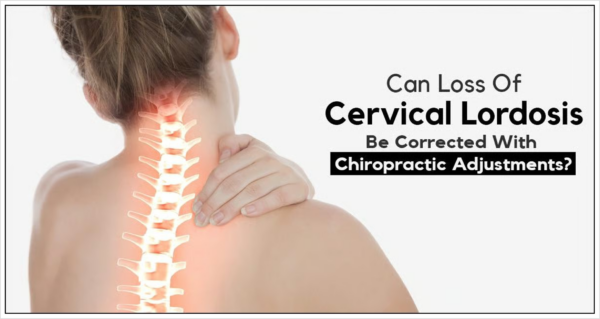
Figure 3: Loss of cervical lordosis is a common but correctable condition that correlates with chronic symptoms.

About Chiropractic BioPhysics® (CBP®)
Chiropractic BioPhysics® is the most evidence-based, published named chiropractic technique system in the world, with over 350 peer-reviewed publications. CBP® uses precise mathematical spinal models and Mirror Image® adjusting, exercise, and spine remodeling or traction protocols — including the Denneroll orthotic used in this study — to achieve lasting structural correction of spinal alignment. Learn more at idealspine.com and cbpnonprofit.com.
About CBP Non-Profit
This publication reflects the mission of CBP Non-Profit—advancing spine and posture research to improve patient care worldwide. Our ongoing projects continue to validate the role of posture correction in musculoskeletal and neurological health.
 Learn more: www.CBPNonprofit.com
About CBP Non-Profit
CBP NonProfit is a 501(c)(3) research foundation dedicated to the advancement of spine rehabilitation through high-quality, peer-reviewed chiropractic and physiotherapy research. With over 350 published studies to date, CBP NonProfit is a global leader in evidence-based spinal care innovation.
CBP NonProfit
Video Library

CBP NonProfit
300+ Peer-Reviewed Publications
Chiropractic Biophysics Non-profit, Inc. is a 501(c)(3) nonprofit corporation dedicated to the advancement of chiropractic principles through scientific research. Dr. Don Harrison (deceased) and his second wife Dr. Deanne LJ Harrison (deceased) founded CBP research foundation in 1982; it was registered as CBP Non-Profit, Inc. in 1989 by Dr. Sang Harrison (Don’s 3rd and final life’s love). Through this organization Dr. Don and colleagues have published over 300 peer-reviewed spine and Chiropractic research publications. Further, CBP Non-Profit, Inc. has funded many scholarships as well as donated chiropractic equipment to many chiropractic colleges; always trying to support chiropractic advancement and education. Dr. Don Harrison was the acting president of CBP Non-Profit, Inc. since 1982. Currently, Dr. Deed Harrison (Don’s son) is the President of CBP Non-Profit, Inc. Read More