
News
Groundbreaking Research Reveals: 3D Spinal Alignment Predicts Fibromyalgia Severity with 97% Accuracy-A New Era for Postural Correction
By: CBP Seminars Research Team
Eagle, Idaho — March 3, 2026
In a landmark study that challenges traditional understandings of chronic pain management, researchers have successfully utilized advanced machine learning to predict fibromyalgia syndrome (FMS) severity based solely on 3D spinal alignment parameters. Published in the prestigious journal Scientific Reports, this research provides the strongest objective evidence to date that spinal structure is not merely a bystander in fibromyalgia but a primary driver of the condition’s debilitating symptoms.
The Study Overview: Quantifying the Invisible
For decades, fibromyalgia has been a diagnosis of exclusion, often leaving patients feeling unheard due to the lack of visible biomarkers. This cross-sectional study, titled ”Advanced machine learning applications in fibromyalgia to assess the relationship between 3D spinal alignment with clinical outcomes,” sought to change that narrative.
Researchers analyzed 303 patients diagnosed with FMS using high-precision Formetric 4D rasterstereography-a radiation-free optical imaging technology that creates a detailed 3D model of the spine. By inputting six specific postural parameters into sophisticated machine learning algorithms (including Fast Kolmogorov-Arnold Networks and Multilayer Perceptrons), the team aimed to determine if structural deviations could accurately forecast the clinical burden of the disease.
Al & Machine Learning Findings: Unprecedented Predictive Power
The results were statistically profound. The machine learning models demonstrated that spinal alignment variables alone could predict clinical outcomes with near-perfect accuracy. Unlike traditional linear regression, which often misses complex biological relationships, these advanced AI models captured the non-linear interactions between posture and pain.
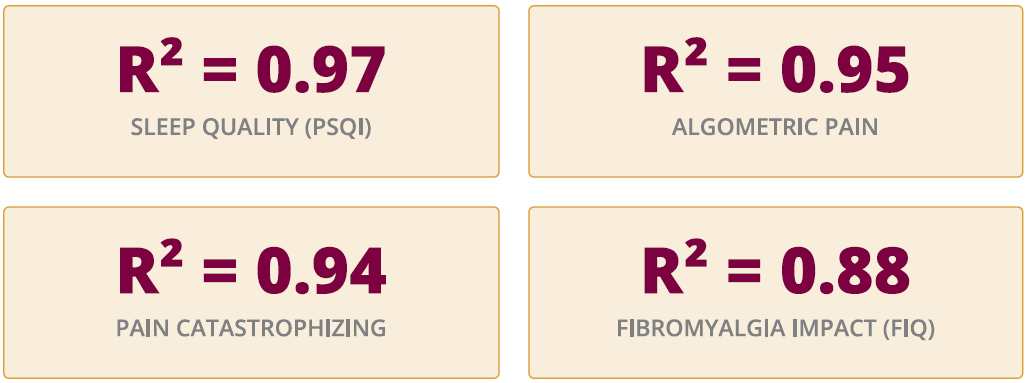
These R2 values indicate that up to 97% of the variance in a patient’s sleep quality and 95% of their pain sensitivity can be explained by 3D spinal posture metrics.
This establishes a direct, quantifiable link between mechanical spinal failure and the central nervous system dysfunction characteristic of FMS.
KEY DATA
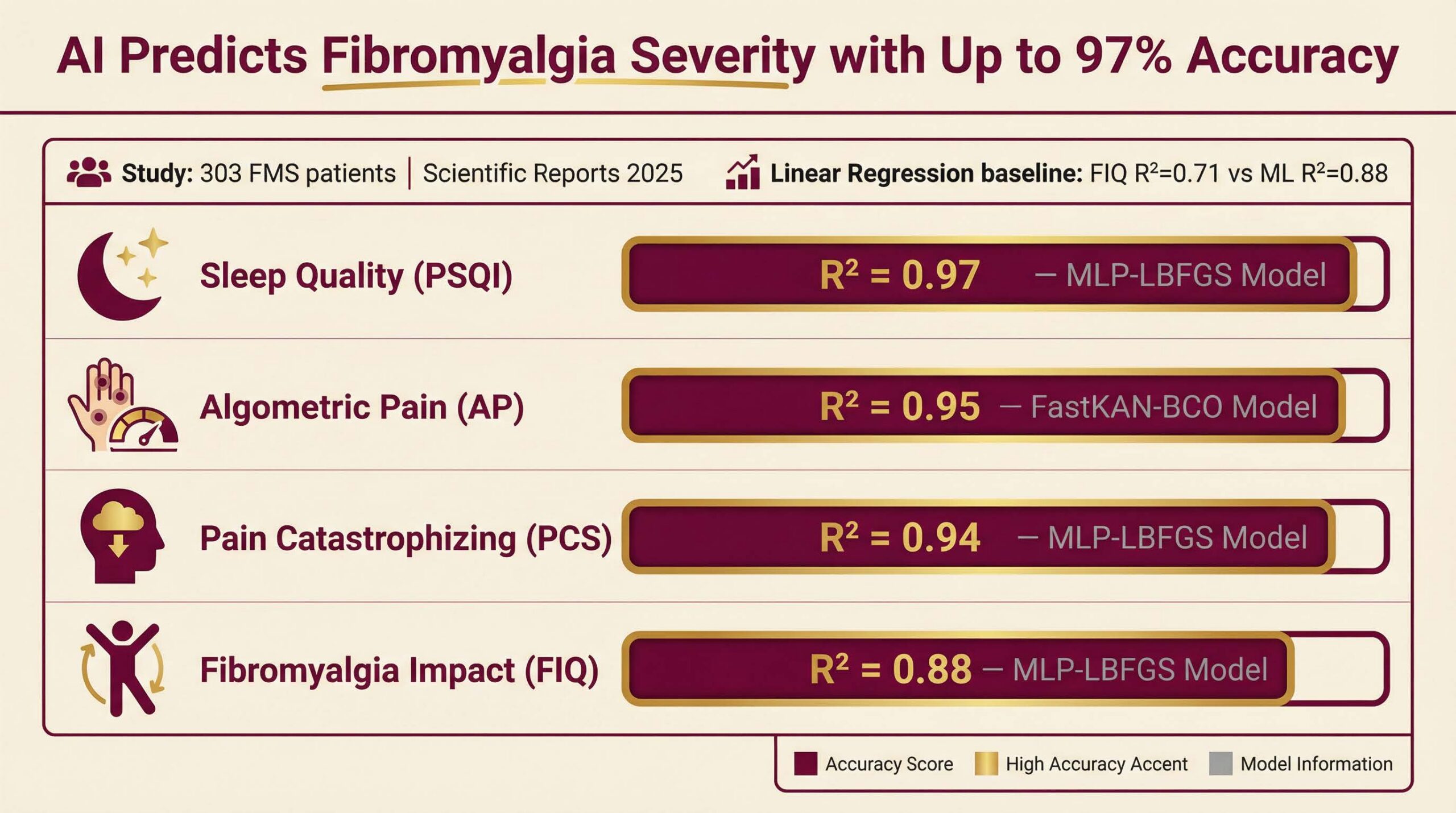
Figure 1: Machine learning models predicted fibromyalgia symptom severity with up to 97% accuracy using only 3D spinal measurements. Source: Moustafa et al., Scientific Reports 2025.
Key Findings: The Critical Thresholds of Pain
Perhaps the most clinically relevant discovery from the study is the identification of specific “tipping points” in spinal alignment. Using SHAP (SHapley Additive exPlanations) analysis, the researchers identified precise structural thresholds where symptoms drastically worsen. Patients whose spinal measurements exceeded these limits experienced a surge in pain, sleep disturbance, and disability.
-
Vertebral Rotation > 10°
The study found that when vertebral rotation exceeds 10 degrees, there is a sharp, non-linear increase in pain catastrophizing and algometric pain scores. This suggests that rotational malalignment may be a potent trigger for the “wind-up” phenomenon in central sensitization.
-
Sagittal Imbalance> 5mm
Sagittal (forward/backward) balance is critical for energy efficiency. The data revealed that a forward imbalance greater than just 5mm is significantly associated with higher pain levels. Remarkably, the average FMS patient in the study presented with a mean sagittal imbalance of 9.8mm-nearly double the threshold for symptom escalation.
-
Pelvic Obliquity> 3-4mm
Unleveling of the pelvis (obliquity) showed a strong correlation with the overall impact of fibromyalgia (FIQ scores). The average patient exhibited 12.0mm of pelvic obliquity, far exceeding the 3-4mm threshold where functional impact begins to climb.
CRITICAL THRESHOLDS
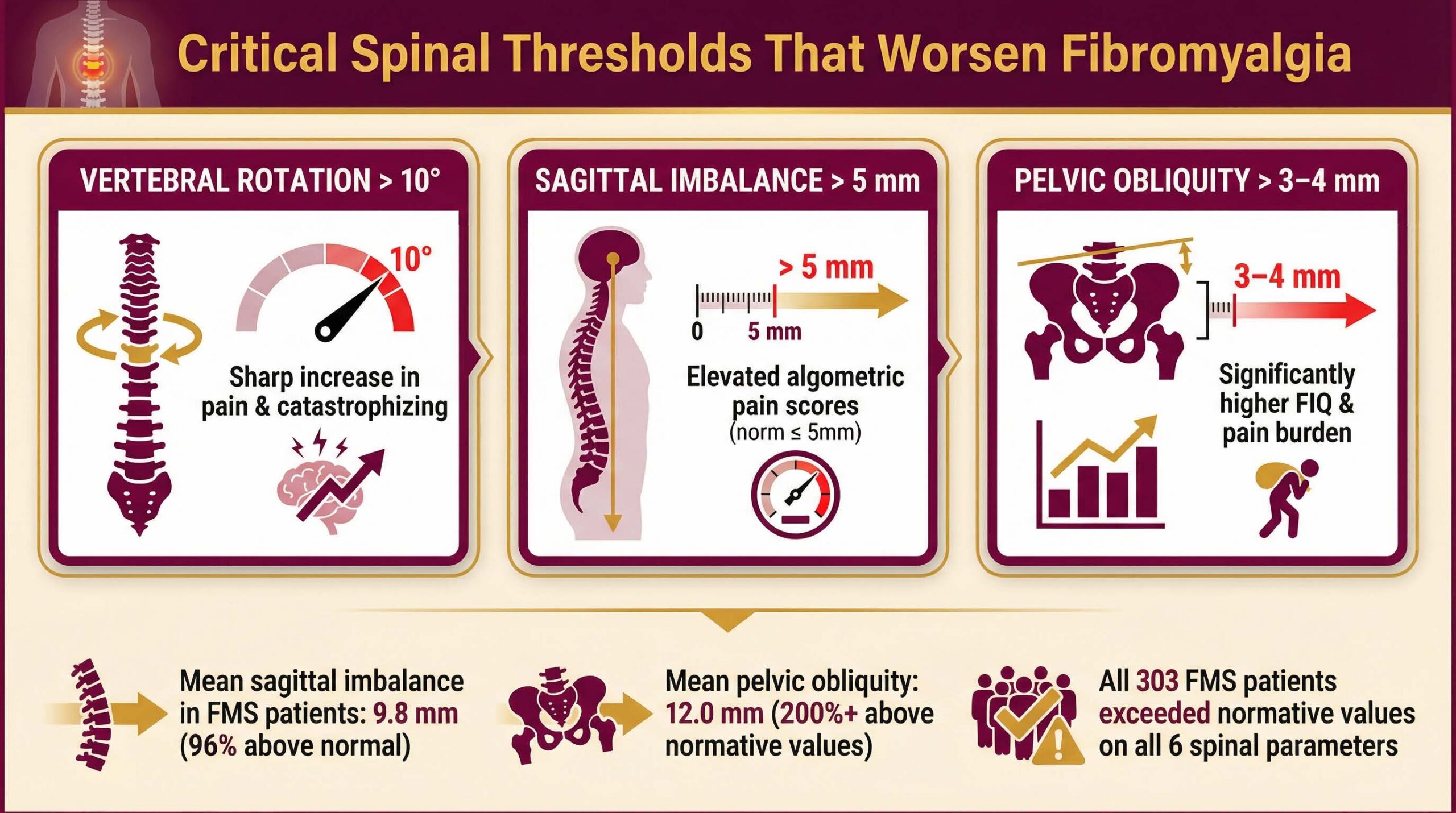
Figure 2: SHAP analysis identified three critical spinal deviation thresholds that significantly worsen fibromyalgia symptoms. Source: Moustafa et al., Scientific Reports 2025.
Expert Insight
“The SHAP analysis strongly supports the role of 3D posture displacements in FMS severity. Abnormal spinal posture may exacerbate central sensitization by increasing nociceptive input to the brainstem and cord. This research confirms that we cannot effectively treat the physiology of fibromyalgia without addressing the geometry of the spine.”
– Dr. Deed E. Harrison, President, CBP NonProfit
Clinical Implications: The CBP® Advantage
For clinicians and patients alike, these findings mark a pivotal shift from palliative care to corrective intervention. The study explicitly notes that “treatments aimed at correcting cervical alignment may improve FMS outcomes.” This validates the core protocols of Chiropractic BioPhysics® (CBP®).
CBP® utilizes evidence-based cervical extension traction and Mirror Image® adjustments to reduce sagittal displacement and correct vertebral rotation. Unlike general manipulation which provides temporary relief, CBP® aims for structural rehabilitation. By restoring the spine’s natural curves and reducing sagittal imbalance below the critical 5mm threshold, clinicians can theoretically reduce the mechanical tension on the central nervous system, thereby dampening the hypersensitivity loop that fuels fibromyalgia.
PATHOMECHANICAL PATHWAY
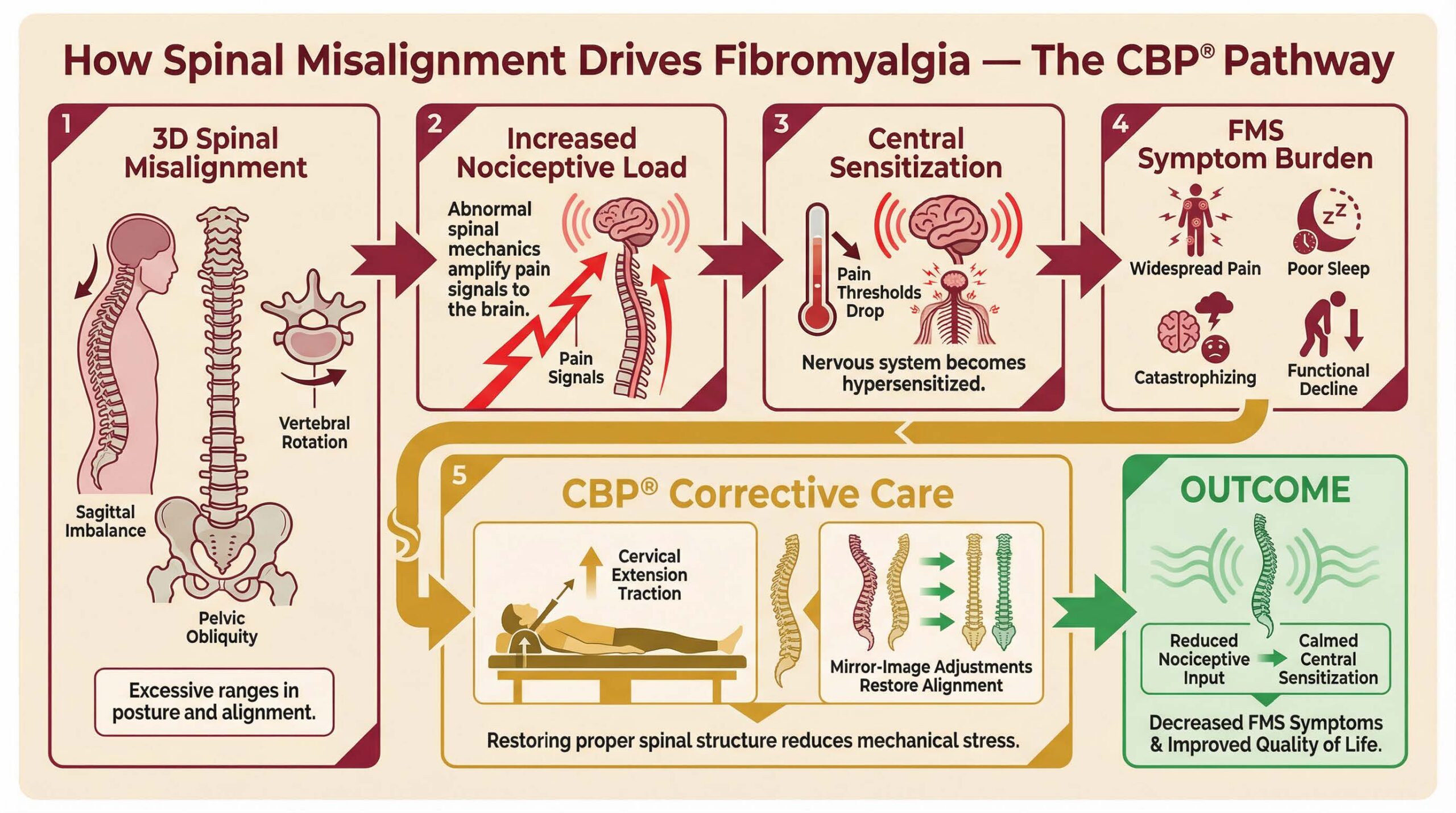
Figure 3: The proposed pathomechanical pathway from 3D spinal misalignment to fibromyalgia symptom burden – and how CBP® corrective care interrupts the cycle.
This proposed mechanism-where structural correction reduces nociceptive bombardment-offers new hope for long-term management of FMS, moving beyond symptom masking to root-cause resolution.
Reference: Moustafa, I. M., Khowailed, I. A., Zadeh, S. A. M., Ozsahin, D. U., Mustapha, M. T., Oakley, P. A., & Harrison, D. E. (2025). Advanced machine learning applications in fibromyalgia to assess the relationship between 3D spinal alignment with clinical outcomes. Scientific Reports; https://pubmed.ncbi.nlm.nih.gov/40594489/
Ready to Address the Root Cause?
If you suffer from fibromyalgia, a 3D spinal assessment may be the missing piece of your puzzle. Contact a CBP® certified doctor today to determine if spinal misalignment is driving your symptoms.
CBP Seminars / IdealSpine
Eagle, Idaho
Phone: (208) 939-0301
About Dr. Deed E. Harrison
Dr. Harrison is a globally recognized chiropractic researcher and pioneer in spinal rehabilitation methods, serving as President/CEO of Chiropractic BioPhysics® (CBP) NonProfit. He has co-authored more than 260 peer-reviewed publications and lectures internationally on evidence-based structural spine care.
About CBP Non-Profit
This publication reflects the mission of CBP Non-Profit—advancing spine and posture research to improve patient care worldwide. Our ongoing projects continue to validate the role of posture correction in musculoskeletal and neurological health.
 Learn more: www.CBPNonprofit.com
About CBP Non-Profit
CBP NonProfit is a 501(c)(3) research foundation dedicated to the advancement of spine rehabilitation through high-quality, peer-reviewed chiropractic and physiotherapy research. With over 350 published studies to date, CBP NonProfit is a global leader in evidence-based spinal care innovation.
CBP NonProfit
Video Library

































CBP NonProfit
300+ Peer-Reviewed Publications
Chiropractic Biophysics Non-profit, Inc. is a 501(c)(3) nonprofit corporation dedicated to the advancement of chiropractic principles through scientific research. Dr. Don Harrison (deceased) and his second wife Dr. Deanne LJ Harrison (deceased) founded CBP research foundation in 1982; it was registered as CBP Non-Profit, Inc. in 1989 by Dr. Sang Harrison (Don’s 3rd and final life’s love). Through this organization Dr. Don and colleagues have published over 300 peer-reviewed spine and Chiropractic research publications. Further, CBP Non-Profit, Inc. has funded many scholarships as well as donated chiropractic equipment to many chiropractic colleges; always trying to support chiropractic advancement and education. Dr. Don Harrison was the acting president of CBP Non-Profit, Inc. since 1982. Currently, Dr. Deed Harrison (Don’s son) is the President of CBP Non-Profit, Inc. Read More